Telegram Bulk Message Sender Price: A 2026 Cost Breakdown

Last updated: October 2026
A Telegram bulk message sender can cost anywhere from $0 for a high-risk script to over $500 for a licensed professional suite. The price you pay directly reflects the tool's features, its technology, and the measures it includes to protect your sender accounts from being banned.
A Telegram bulk message sender is software designed to automate sending direct messages to a large list of users. These tools are used for marketing, outreach, and communication campaigns on the platform. Understanding the different price points is key to choosing a sustainable solution.
Telegram Bulk Message Sender: Software that automates sending direct messages (DMs) to many Telegram users at once, often by managing multiple sender accounts. Why it matters: This technology enables direct, large-scale outreach on a platform with a massive user base, but it requires careful management to avoid account bans and adhere to platform rules.
Key Takeaways
- Price Reflects Safety: Higher-priced tools typically invest in features like account warm-up, randomized delays, and client emulation to reduce ban rates. Free tools often skip these, putting your accounts at immediate risk.
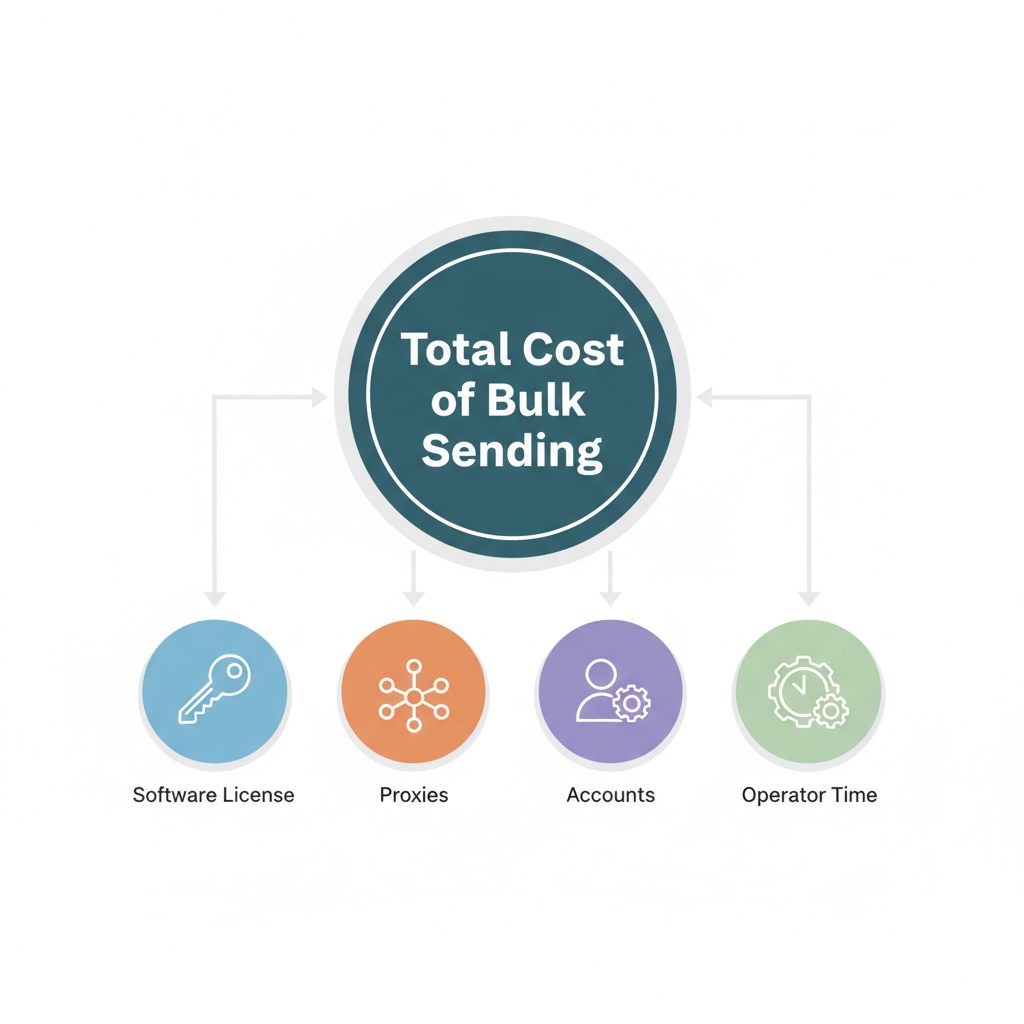
- Factor in Hidden Costs: The software license is only one part of the total expense. You must also budget for recurring costs like high-quality proxies and the acquisition of sender accounts.
- Choose Your Tool Type Carefully: Desktop software provides maximum control over the sending process. In contrast, cloud-based SMM panels offer convenience but less transparency. Free scripts offer neither reliability nor support.
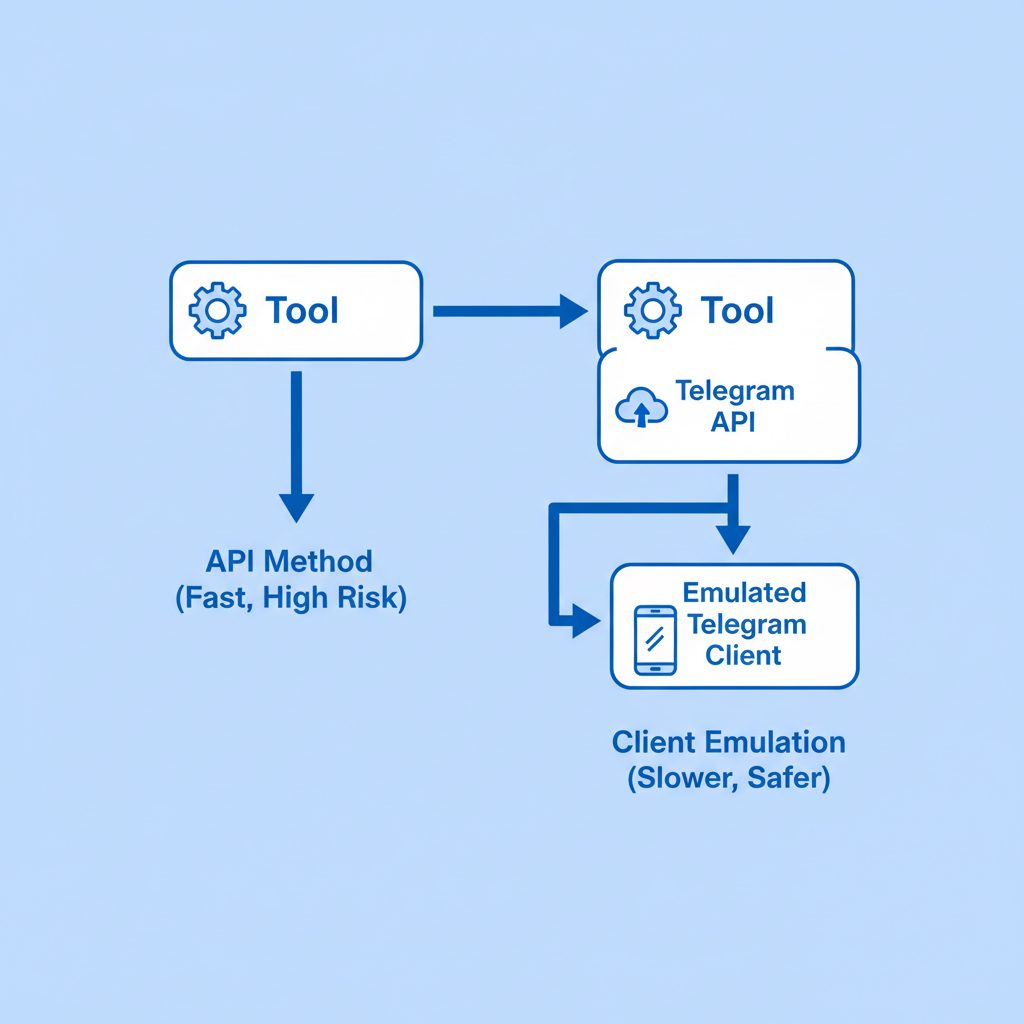
- Understand the Sending Method: API-based sending is extremely fast but easily flagged by Telegram's anti-spam systems. Emulating a real Telegram client is slower but significantly safer for long-term operations.
Telegram Bulk Sender Price Comparison (October 2026)
The market for Telegram senders is fragmented, with prices varying based on the tool's design, support, and features. Below is a summary of typical costs.
| Tool Type | Typical Price Range | Payment Model | Best For |
|---|---|---|---|
| Desktop Software | $50 - $300 | One-time or Annual License | Operators needing full control, multi-account management, and long-term use. |
| TgSoft Sender | Varies by license | Annual License | Professionals prioritizing account safety with advanced warm-up and client emulation. |
| Cloud SMM Panels | $5 - $20 per 1,000 DMs | Pay-as-you-go / Subscription | Quick, small-scale campaigns where account ownership is not a priority. |
| Free Scripts (GitHub) | $0 | Free | Technically skilled users for testing purposes, with a high tolerance for account loss. |
| Chrome Extensions | $0 - $30 | Free or Monthly Subscription | Casual users sending a low volume of messages from a single account via Web client. |
| Custom Development | $1,000 - $10,000+ | Project-based | Large-scale operations with unique requirements for integration and workflow. |
What Determines a Sender's Price?
The large price difference between sender tools comes down to four core factors: the sending method, account safety features, ongoing support, and included utilities.
Paying more generally buys you reliability and a lower risk of account suspension. These features directly impact your campaign's sustainability and return on investment.
Sending Method: API vs. Client Emulation
The most critical factor in a sender's price is how it communicates with Telegram. This choice directly impacts both speed and safety.
- Client-Based Senders: These advanced tools emulate an official Telegram client, like the desktop or mobile app. They do not use the public API directly. Instead, they replicate the behavior of a human user. This method is slower but far less likely to trigger automated anti-spam flags because the activity pattern appears more natural. This complexity is why client-based software, like TgSoft's Sender, typically has a higher price.
The safest sending method is always the one that most closely mimics human behavior.
Multi-Account & Warm-Up Features
Sending thousands of messages from a single account is the fastest way to get it banned. For this reason, professional senders are built for managing multiple Telegram accounts at scale. Their price reflects features that automate this process safely:
- Account Rotation: Automatically cycles through a pool of sender accounts.
- Randomized Delays: Inserts variable pauses between messages to mimic human typing and behavior.
- Account Warm-Up: Gradually increases the activity of new accounts over days or weeks to build a trust score before using them for mass outreach.
Free scripts and basic tools lack these features, placing the entire burden of avoiding detection on the user.
Support and Software Updates
Telegram periodically updates its platform, which can break unmaintained sending tools overnight. A portion of the price for a licensed product covers ongoing development and customer support. When a free script from GitHub stops working, you are on your own. With a professional tool, however, you receive updates that adapt to Telegram's changes, ensuring your operations can continue.
Included Utilities
Advanced senders often bundle other tools that are essential for a successful campaign:
- Member Scrapers: To extract user lists from target groups.
- User Filters: To clean lists by filtering for recently active users, removing bots, and avoiding admins.
- Spintax Support: To create message variations, reducing the chance that you send the same text thousands of times, which is a major spam indicator.
The Hidden Costs of Bulk Messaging
Your total investment will be higher than the software's sticker price. Failing to budget for these operational costs is a common mistake that derails campaigns.
- Proxies: Running multiple Telegram accounts from a single IP address is a major red flag. You will need to budget for proxies, typically residential or mobile IPv4 proxies, which can cost from $20 to over $200 per month depending on quality and data allowance.
- Telegram Accounts: Sender accounts are disposable assets. You will lose some to bans, even with the best precautions. This cost includes either buying aged accounts or the time and resources spent creating and warming them up yourself.
- Operator Time: The time spent configuring software, managing accounts, dealing with bans, and analyzing results is a significant, often overlooked, cost. A more expensive but reliable tool can lower this cost by reducing manual work and troubleshooting.
Where TgSoft Sender Fits
TgSoft's Sender (bulk messaging) is a professional, client-based desktop application designed for operators who prioritize control and account longevity over raw speed. It operates by emulating a real Telegram client, making its activity profile much harder for anti-spam systems to detect compared to common API-based tools.
The software is built around multi-account management, with integrated features for account rotation, warm-up schedules, and detailed reporting. It is a licensed Windows application, not a cloud service or a simple script.
TgSoft Sender is for users who view bulk messaging as a long-term strategic channel and are willing to invest in a durable toolset. It is not the right fit for someone seeking a free, one-click solution for a single, small-scale campaign.
How Do Bulk Messages Compare to Official Telegram Ads?
Bulk messaging and official Telegram Ads serve different strategic purposes and have vastly different costs and risks. While direct messaging offers a personal touch, it operates in a gray area of Telegram's rules.
- Official Telegram Ads: These are displayed as sponsored messages in large public channels (with over 1,000 members). According to Telegram, the platform has a minimum bid of just €2 CPM (cost per thousand views), making it accessible for various budgets (Telegram Ads). This method is better for broad brand awareness.
- Bulk Direct Messaging: This method delivers a message directly to a user's inbox. It is highly direct and personal but operates against Telegram's Terms of Service, which prohibits sending unsolicited messages. This carries the primary risk of account bans.
A full analysis of Telegram advertising cost vs direct outreach shows that the best choice depends entirely on your campaign goals, budget, and risk appetite.
Your next move
- Assess your risk tolerance. Decide if the high probability of account bans from using free or cheap tools is a cost you are willing to bear. For any serious business, the answer is usually no.
- Calculate your total budget. Do not just look at the software price. Factor in the monthly recurring costs of quality proxies and a steady supply of sender accounts.
- Evaluate your technical skill. If you are not comfortable managing proxies, virtual private servers, and command-line interfaces, avoid free scripts from sources like GitHub.
- Review a professional tool's features. Examine a solution like TgSoft's Sender (bulk messaging) to understand what a professional-grade workflow looks like. Compare its features against your operational needs.
Frequently asked questions
How many messages can I send per day from one Telegram account?
The number of messages an account can send per day depends on its age, trust score, and warm-up history, not the sender tool itself. A fresh account may only handle 20-30 messages, while a well-aged account could send over 80. Community best practice is to start slow and increase volume gradually to avoid detection by Telegram's anti-spam systems.
Is sending bulk messages on Telegram legal?
Sending unsolicited messages is a direct violation of Telegram's Terms of Service and will lead to account restrictions or bans. The legality of the act itself depends on your local laws on electronic messages (like CAN-SPAM in the U.S. or GDPR in the E.U.) and the content of your messages. Always consult with a legal professional.
Can I use my personal Telegram account for bulk sending?
No, this is strongly discouraged. Using your personal account for bulk messaging is the fastest way to get it permanently banned. You would lose access to all your personal chats, contacts, and channel history. Always use dedicated, disposable accounts for any outreach campaigns.
What is the difference between a Telegram sender and a bot?
A sender is software used to start conversations with new users. A bot, like those created with BotFather, is typically used to automate responses, manage groups, or provide services to users who interact with it first. For handling replies to your campaigns, you might use Telegram auto reply software.
Do I need proxies for a Telegram sender?
Yes, if you plan to use more than one or two sender accounts. Running multiple accounts from the same IP address is a clear signal to Telegram that you are engaged in automated activity. Using one unique, high-quality proxy per account is a fundamental requirement for any serious bulk messaging operation.